Alison Rickey Ames and the Maverick

Updated: Feb 8
By Phyllis Tower
This month Learning Woodstock Art Colony has the pleasure of publishing the following piece on the artist Alison Rickey Ames by longtime Maverick resident Phyllis Tower, who offers many thanks for help and encouragement to her daughter Nadja Lazansky and to her dear friend, Alison's grand-niece Mary Ball. If you're near Gettysburg College in Pennsylvania go view the exhibition Making Her Mark: 50 Women Artists of the Historic Woodstock Art Colony, which was on view last summer at the Historical Society of Woodstock. and is up through April 11th.

Alison Ames with Midnight, c. 1950
Alison Rickey Ames was born in 1916 in Helensburgh, Scotland, an ancient tree-lined town on the River Clyde; her father, an engineer for Singer Sewing Machines, had been transferred to Scotland in 1913. (The Rickey family lived in a historic house in the Schenectady Stockade District.) In the mid-1930s, the family (parents and six children) relocated back to the States. Alison studied art in Scotland and New York and later at Cornell University, receiving an MFA in 1959.

George Rickey at Work
in East Chatham. New York. 1965
George Rickey Foundation
Her older brother George Rickey also studied art and became a well-known kinetic sculptor. His studio was across the river in East Chatham, and the two siblings would visit back and forth. Alison first worked as an assistant curator in the Print Department of the Metropolitan Museum, and later taught art in New York City high schools.

Alison Ames in her house, Iris, on Muse Road, c. 1950

Alison Ames (1916-1980)
The Tulip Tree, n.d.
Ink drawing
Collection of Phyllis Tower

Alison Ames (1916-1980)
Little Dock at Somes Sound, Maine, 1975
Ink drawing
Collection of Phyllis Tower

Alison Ames (1916-1980)
View at the End of Somes Sound, 1975
Ink drawing
Collection of Phyllis Tower
In 1936, on a visit to Woodstock, Alison met her husband-to-be, the composer William (Bill) Ames, and moved into his Maverick home, Iris, on Muse Road. The couple spent the winters in New York, and Alison used the country summers for making art, usually ink drawings, or the occasional watercolor or oil. She was a private artist, working for herself, mastering her skills outside of the limelight. Alison’s job at the Met enabled her to more closely study Japanese and Chinese art, which was a major influence. She worked in a distinctive contour line style. The continuous lines capture details, create intricate patterns, and often emphasize negative space. Often her drawings as a whole form shapes within the frame of the paper. Drawing for her was a form of meditation, and her focus was on what she saw around her. Instead of going out in search of a motif, she liked to draw whatever she looked up and saw: the furniture, the porch with the tea table set out, the tulip tree, or the frogs on the rock next to the little pond.
Alison and Bill had separated by the time I came to know her in the 1960s after I had arrived at the Canal Boat down the road (former home of the artist Grant Arnold, among others), with my family. In those days we had unrelenting summer spells of hot steaming damp, fog, rain, and drizzle (making for “The Green Hell of Woodstock,” as Sidney Geist used to say). Then I would get the first alert from Alison—“The shoes are turning green!” (not in the closet, however, because there was nary a closet on the Maverick—as the Maverick founder Hervey White would have said, “you’ve got a nail to hang your shirt on, don’t you?”). I would check my own shoes, and sure enough . . . . It was Alison who said, “when they started building a Maverick house, they just put down four stones.”
There was also no indoor plumbing, which Hervey considered the beginning of the end, the slippery slide into needless splendor and expense. I had succumbed to this degeneracy, but Alison still had her outhouse. She said it was not so bad “except when you freeze your tush in the dead of winter.” Once when I had a roof leak Alison told me she had been up on her roof for years, that I could do roofing too—“and here’s how you do it.” Most of these houses were trying their best to sink back into the ground. Alison kept Iris alive almost single-handedly.

Alison Ames (1916-1980)
Frogs by the Pond, n.d.
Ink drawing
Collection of Phyllis Tower

Alison Ames (1916-1980)
The Frog Pond, n.d.
Ink drawing
Collection of Nadja Lazansky
Alison was a great cook. I remember the candle-lit dinners (her famous moussaka, or spinach pie, or chicken pot pie, the recipe from her original Fanny Farmer cookbook, or Marcella Hazan’s pork cooked in milk) that she loved to share with friends on the screen porch near the frog pond, listening to the katydid chorus and safe from the dreaded hordes of mosquitos. The little side tables we used had been made by Alison’s much-loved nephew, Geoff Ball, out of up-ended wooden liquor boxes.

Alison Ames (1916-1980)
Beardsley, 1975
Ink on paper
Collection of Phyllis Tower
Where Alison was, Teddy and Beardsley were not far behind. These were her irrepressible Hungarian sheep dogs. They had replaced Alison’s big old famously long-lived cats Button, Blackie, and Midnight, who survived into their twenties because she cooked for them. The dogs got a zero at obedience school, but Alison got a big award for her patience. She used to say “Teddy is the instigator”—he would bark madly and jump whenever a car went by, and when a guest arrived he would get little black Beardsley going too. After this magnificent welcome had begun to ebb, one could settle down to a proper, and delicious, tea (often on the lawn), a habit Alison had kept from her childhood in Scotland.

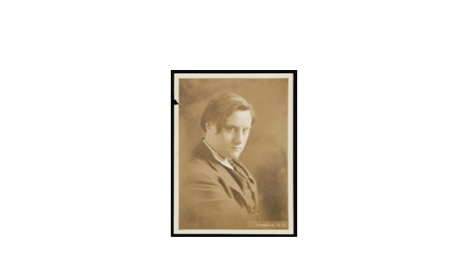
Bill Ames, 1930
Sometimes Bill Ames joined us at tea. They told me that a whole skunk family had paraded in the cat door, one by one, while they were lying in bed. They just lay there as the skunks investigated the kitchen and departed. Once when she went into the kitchen Bill told me how “enchanting” Alison was as a girl and how “captivated” he had been. They were married for almost 25 years.

Alison Ames (1916-1980)
Portrait of Bill Ames, n.d.
Ink drawing
Historical Society of Woodstock
Bill Ames was born in Cambridge, Mass., in 1901 and began to study the piano at 8 years old. He went on to major in music at Harvard and then spent three years in Paris studying theory with Nadia Boulanger. From 1928 to 1938 he taught music theory at the Eastman School of Music in Rochester. He first came to Woodstock in 1922, to visit his friend the painter Henry Billings. Hervey White allotted him a house on the Maverick where he was to spend many summers; in 1936 he met, was “captivated by,” and married Alison Rickey. Throughout the 1940s and ‘50s, Bill and Alison spent the winters in New York, where Bill had concerts at Town Hall and Carnegie Hall. However, as he says, “My life pretty much centered around Woodstock…my wife and I rented a place…and would go up there almost every weekend, as well as every summer.”

William Ames and the Maverick String Quartet, 1940.
From the left: Frederic Balazs,
Clifford Richter,
John Lynes (guest clarinet), William Ames,
George Finckel, Leon Lenard.
Source unknown.
Bill wrote a great deal of chamber music, which was performed in Woodstock: “I think that I’ve written more chamber music because I was interested in writing music…for performers who I knew, who were in the neighborhood,” i.e., the musicians who lived on the Maverick. This way he knew his pieces would be performed. A great deal of modern music was played in Woodstock during the 1940s and 50s. In 1954 Bill took a position as composer/pianist for the Dance Department at Cornell, where he and Alison stayed for eight years.
Back in Woodstock, Bill began an affair with Marcia Nardi, a poet who lived down the road in the Canal Boat. Frank Mele, the violinist who lived in Birdseye, halfway between both houses, told me he was outside when Marcia’s husband Chuk Lang came walking by with a shotgun over his shoulder, ready for a confrontation. Frank talked him into leaving the shotgun behind, and the confrontation was fruitless. Bill and Marcia ran away to New York, but Bill soon returned to Alison. In 1962, she finally had had enough of Bill’s philandering, and she divorced him. He then moved in with his first wife, the painter Grace Greenwood, and went to live in her home in town, but spent the next three summers at the MacDowell Colony.
Bill’s music is seldom played today. He said in an interview that he found it “very difficult to classify my music.” The interviewer gave it a try: “It’s not romantic, not tonal or atonal, but something in between.” Bill’s own favorite piece was Night Sounds: “I’ve noticed late at night that the sounds of the city are very suggestive—[like the] sounds of the traffic.” He also said he was fond of the Beatles because of their “variety and subtlety.” In 1965 he moved to Mendocino, on the California coast above San Francisco, where his nephew Norman La Valle offered help and friendship. Bill continued to compose and perform there until his death
in 1987.

Alison Ames (1916-1980)
Untitled Landscape, 1975
Gouache on paper
Collection of Phyllis Tower
On Sunday afternoons in the 1970s, Alison and I would walk through the woods to the Maverick concert on the path by the little cabin (the former men’s dressing room for the long-ago festivals) that Alison was renting to the writer Peter Mallory for $20 a month. Peter would come out to say hello, usually wearing his favorite pink angora sweater. On the bottom he wore a lamp chain around his waist attached to a broccoli rubber band, to hold up his penis. Had he seen this interesting arrangement in the National Geographic, we wondered? (One of the writers that Peter typed for to make a living was Gail Godwin, who used him for the model of the typist in the story “St. John” from Mr. Bedford and the Muses.) Alison thought Peter belonged on the Maverick. He had lived in the Pottery Shop, where he and his then-wife Sally liked to play badminton in the nude on the lawn. Alison told me that at the time when the Maverick was split up in the late fifties, residents had the opportunity to buy land at so much an acre, with the house they’d been living in thrown in for nothing. Kees van der Loo, who had lived away from the Maverick for most of his life, was a very different animal from his free-wheeling father Fritz (Hervey’s partner in the original purchase of the Maverick land in West Hurley, New York). Kees didn’t approve of nude badminton-playing and had refused to offer the Pottery Shop to Peter.

Eugenie Gershoy (1901-1986)
Maverick Country Club (Community Garden), 1926
Private Collection

From Left:
Arnold and Lucille Blanch, Gershoy,
Austim Mecklem, Reeve Brace, Ernest Brace, Helen Walters, Carl Walters,
Below:
Hanna Small, Harry Gottlieb
In the old days everyone had joined in the famous Sunday afternoon tennis parties, just by Lucile Blanch’s house. Alison used to laugh and say, in her slight Scottish accent, “those tennis parties were an excuse to drink martinis!”

Alison Ames (1916-1980)
Rocking Chair, n.d.,
Ink drawing
Collection of Phyllis Tower

Alison’s Rocking Chair
Photograph by Kirby Lee
Alison left hundreds of drawings; many were ruined by a roof leak after she died. Others are scattered among relatives and friends. Here’s one of her furniture drawings—she gave the chair to my daughter before she died, and the drawing is hanging above it. Once, near the end, when she was very ill, she asked me to take the paintings she didn’t like to the dump (in the days before landfill) and leave them propped up on the side, so an art student could use the stretched canvases. Remembering this dump run reminds me of how her partner Jim Tierney described the travels of “the stuff” (he was the one moving it)—“from the street in New York—to the New York apartment—to the Maverick house—to the little white storage shed—to the dump!” (I recognize this progression.)

Alison Ames (1916-1980)
Portrait of Elizabeth, n.d.
Watercolor on paper
Collection of Phyllis Tower
Alison had a kind of surface reticence, and it took a while for me to see the richness of character that lay underneath. There never was a better friend, one more generous, understanding, and kind, to me and to my daughter. If I had a problem, Alison would say: “Let’s think this through . . . ,” and give me all her attention. That phrase still runs through my mind when I need to work something out. She was also a link to the past, and told me many stories of the old days. Mostly, when I think of Alison, I remember her laughing—she so loved a good funny story, the more subtle, the better.

Alison Ames (1916-1980)
Landscape, n.d.
Oil on canvas
Collection of Nadja Lazansky
Alison planted so many flowering bushes and trees, most of which are gone now. The peach, the Golden Delicious apple, and the cherry trees lasted for years and finally succumbed to age, fungus, or high winds. The Blue Flag irises in the little stream off the frog pond were there when she came and are still there.
Alison’s nephew Geoff Ball wrote a brief account of his aunt and family occasions spent with her on the Maverick:
"I had an uncle, George Rickey, who was the only son in the family. He had five sisters, Elizabeth, Emily, Kate, Jane, and Alison. My mother was Kate, the red-headed one. From time to time we would go to Uncle George’s home in East Chatham across the river, or sometimes we would have him to the Maverick cottage I inherited after Aunt Alison died.
We have bittersweet memories of the year 1980, when Alie (as we called her, pronounced “Ailey”) became ill with metastasized breast cancer. At the beginning of the summer, she and her friend Jim Tierney called from New York and asked me to take her to the Maverick—that was where she wanted to be. We knew it would be her last summer. . . . My first recollection of the Maverick dates from the later 1940s. My family had recently relocated from eastern Canada to Schenectady. My parents drove to Woodstock with my sister and me, as well as my Aunt Elizabeth and my grandmother Grace Rickey, to visit Aunt Alie. My aunt and grandmother stayed at The Maverick Motel on the far corner of Route 375 and Maverick Road, while we all went to stay at the rustic cottage.
There was no running water. My sister and I would take one-gallon jugs down the hill to a well with a hand pump. We would fill up the jugs, bring them back to the cottage, and pour the water into a wood cask that was always teetering on the edge of the window sill in the kitchen. There was a spigot so we could draw water as needed.
Likewise, there was no indoor bathroom. There was an outhouse about 100 feet away, toward the hill. It filled me with fright to go into the woods at night with a flashlight; I was sure I was about to be eaten by a bear or attacked by some other terror of the night. . . ."

Alison Ames (1916-1980)
Waterfowl, n.d.
Oil on canvas
Location unknown
When Alison died in 1980, I had an unexpected inheritance—an enduring friendship with Alison’s nephew Geoffrey Ball, his wife Julie, and their three children. Geoff and Julie are both gone now; their daughter Mary is still my friend, and I have brand-new friends in Jeff Stark and Chelsea Wagner, who have made the house live again.

Such a charming poignant story of one very talented artist, and the sister of an incredible one, George. Such a rich life brimming with simplicity and eccentric characters (Peter!) Thank you for introducing me to Alice. I am going to adopt her phrase “Let’s think this through." Paula R. Hornbostel